What about a Valentines-May?
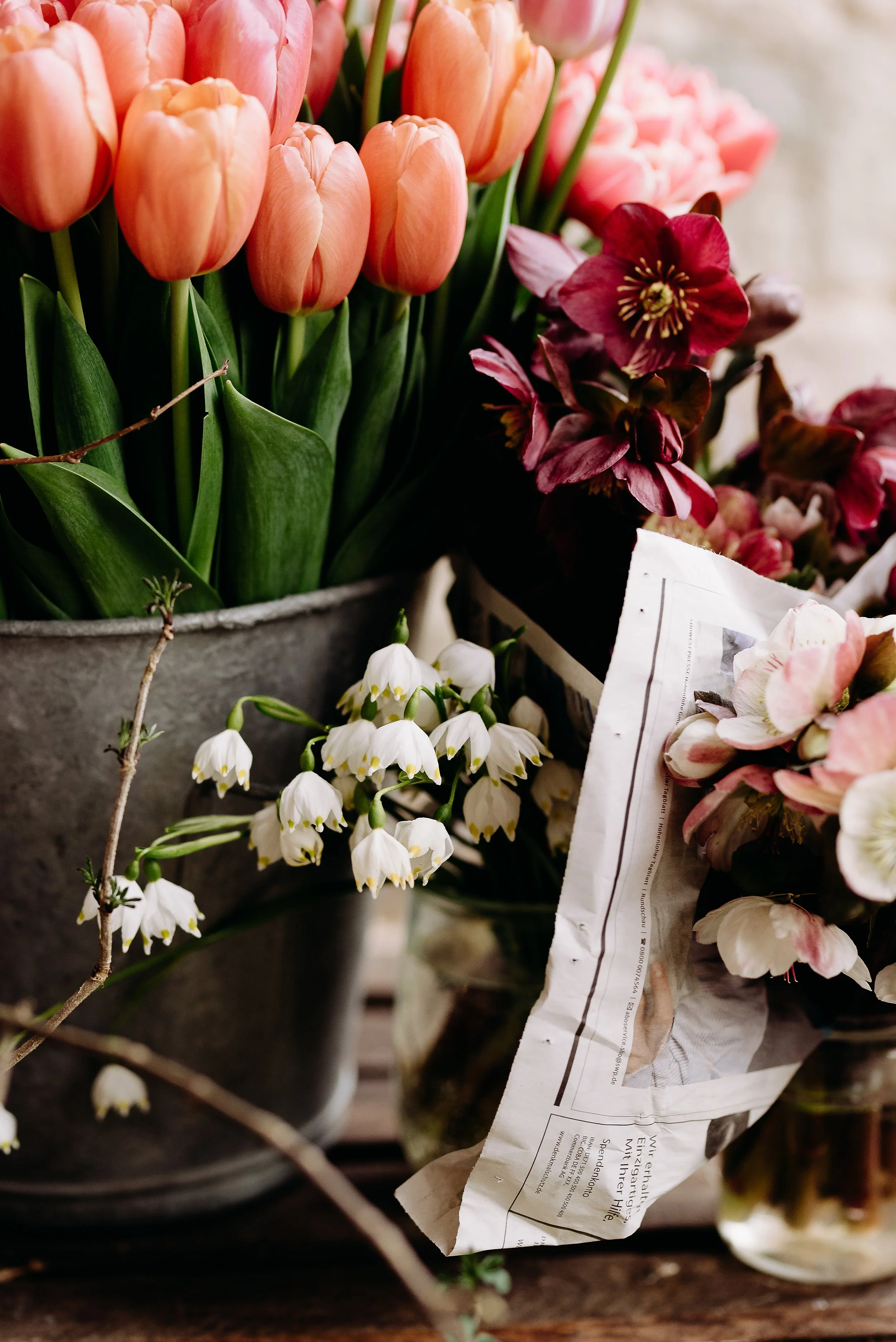
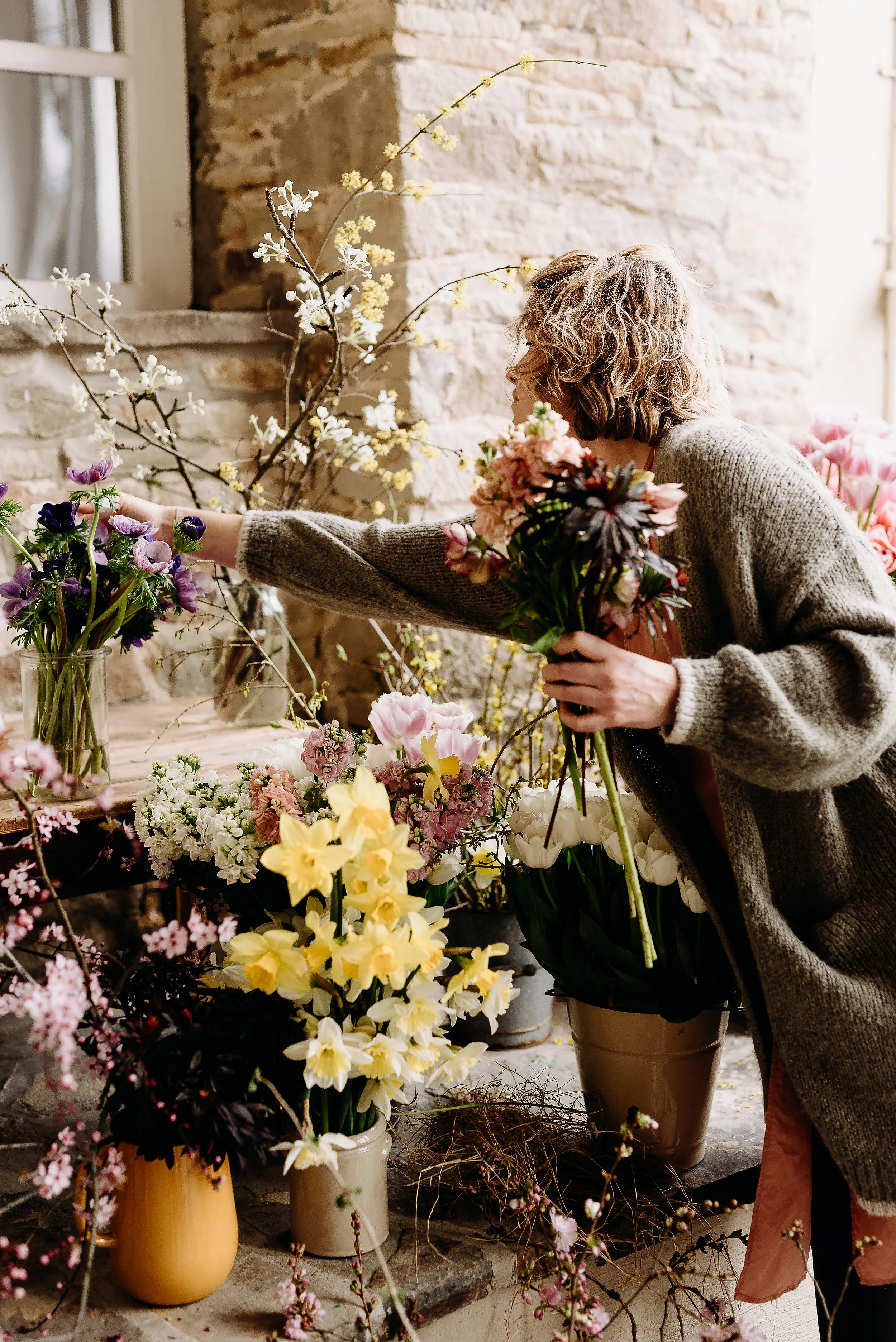
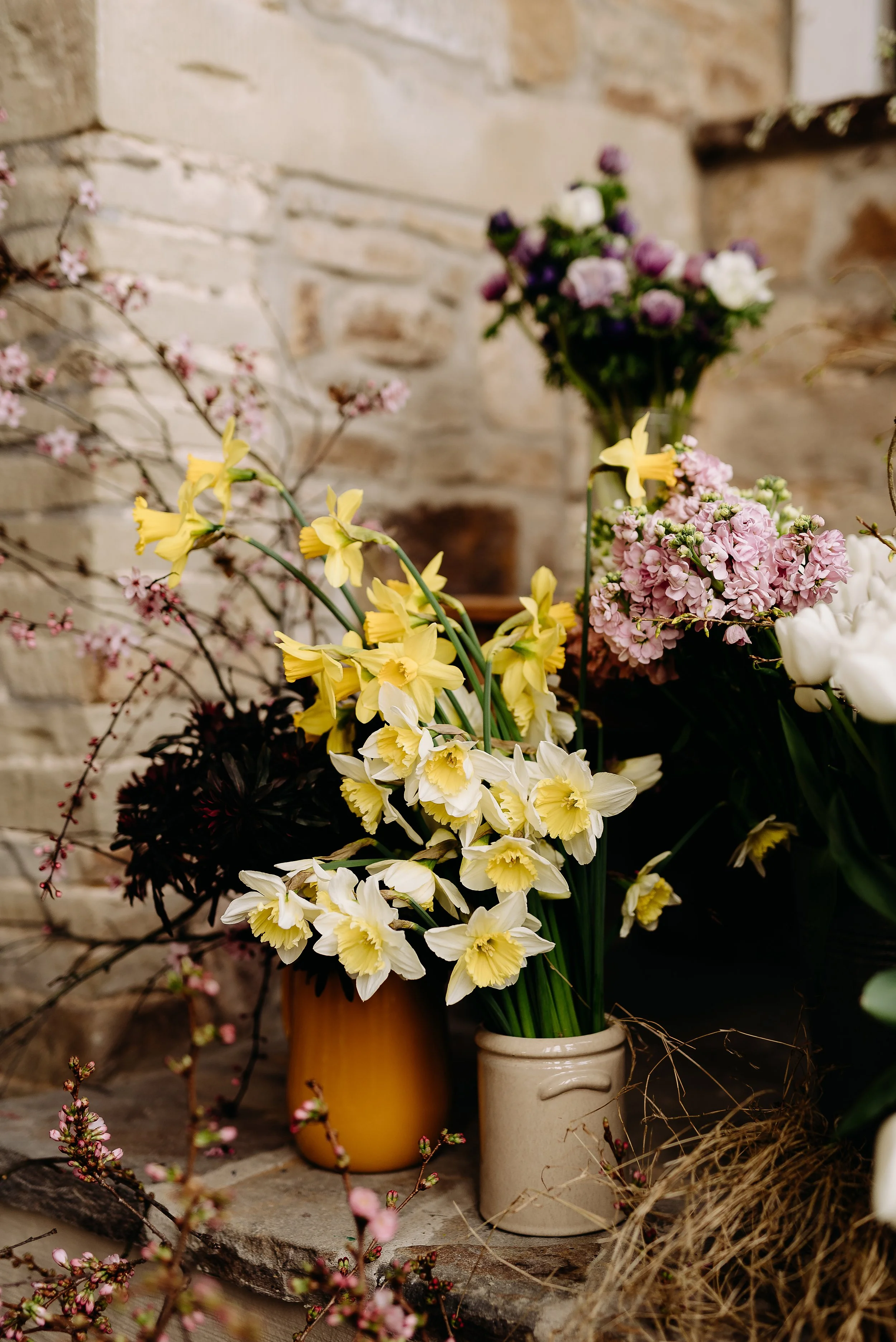
Blooms, in time for the Spring Equinox (mid March).
Images: Fanni Herman
An Eternal Spring
It is the 8th of February 2026 and the birds sing their morning song. A view onto the balcony-garden confirms:
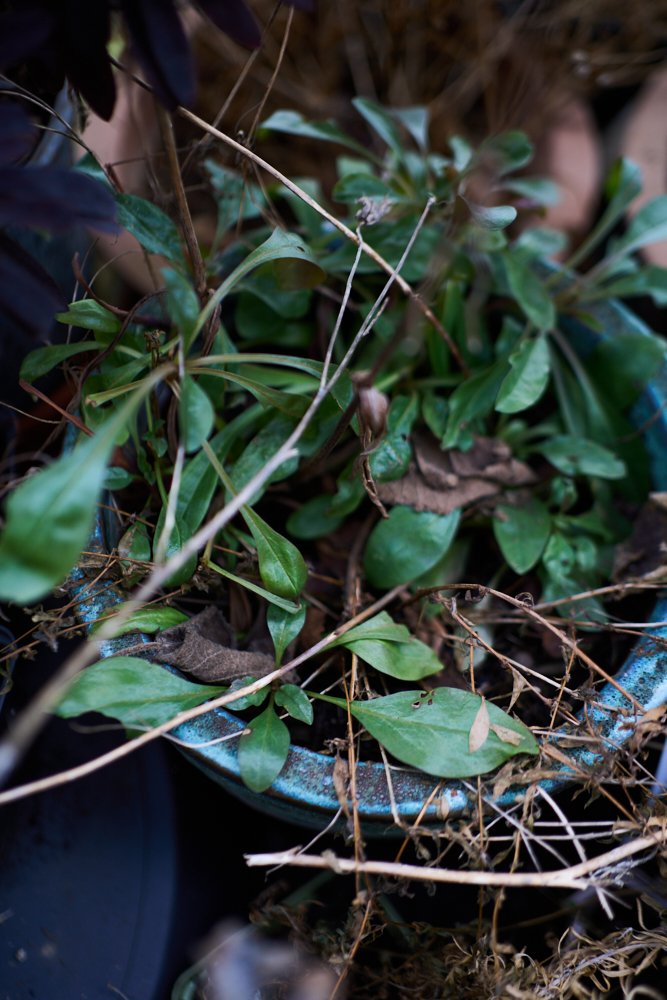
No red roses on Valentinesday. No Tulips. No Narcissi. No Anemones. No Hyazinths. Only a few leaves that are pushing though into the rather mild morning day.
An anticipation and reminder of what is yet to come — not mid-February but mid March. Whilst an eternal spring is moving into the flower shops and garden centres, there is yet a bloom to emerge from the solid frozen grounds. Stepping into a nursery on a Saturday afternoon, the perennial beds in front of it are bare earthed, not a leaf in sight, whilst massive containers overflowing with brightly flowering spring-bulbs and half-hardy plants make-believe of a spring, that isn’t here yet.
Tempted are all the hearts of garden-lovers that feel the deep craving for something-to-flower in their life (me included) maybe even fuelled by the idea of a floral romance for their Valentines date , the heavy scent of hyacinths and that vibrant “its-time-to-garden” energy carried by all the visitors, swooning over the potted roses and candy coloured ranunculus.
Yet the reality is a different one.
With the Spring Equinox (mid-March) the season of working with fresh gardened blooms starts off with an abundance of choice. Just not right now. In February there is no spring. Just Illusion.
Beware, the following numbers are the current reality.
But should you dare to power though, I might have something delightful for you to look out for. (P.s.: Yet its called Spring.)
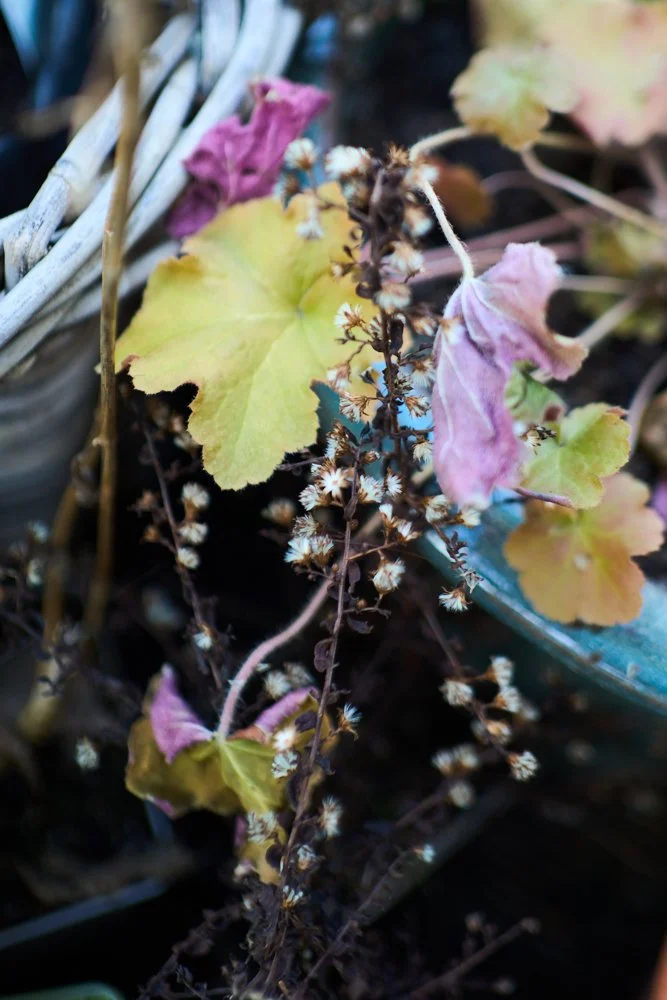
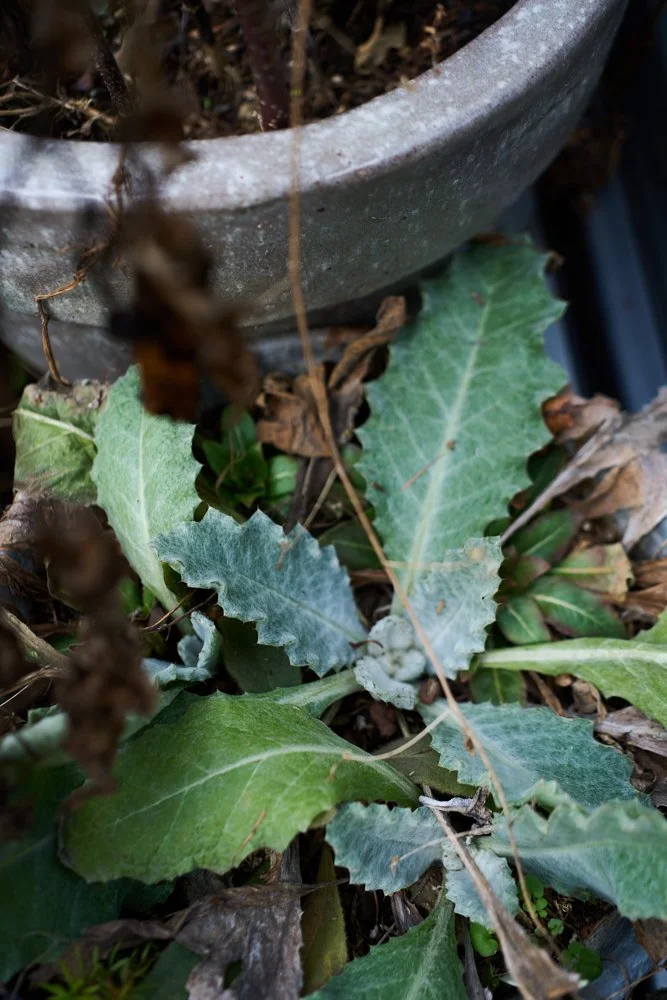
Left: Heuchera “Caramel” with seedheads of Aster laterifolius var. horizontalis “Prince” / Right: Onopordum acanthium
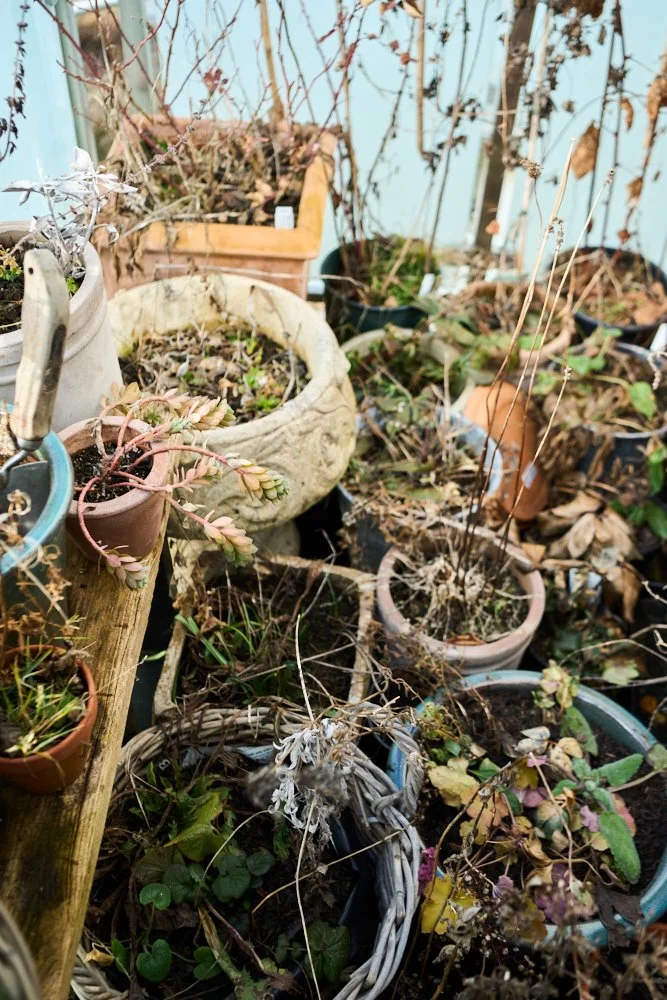
The Balcony-Garden on February 8th 2026
Pure, Raw Numbers:
Last years revenue of cut-flower revenue in Germany exceeded one million Euros (Tagesschau, 2025)
The overall import-volume was estimated with 387.1 million stems with a total value of 124.7 million Euros. (Statistisches Landesamt Baden-Württemberg, 2044)
Between January and November 83.7 million roses with a value of 268 million Euros were imported. 90.5% of all imports run though the Netherlands.
Yet the production is located worldwide.
77% of cut-roses have an origin in Africa and South America ( Oekoreich, 2022) .
Lack of strict regulations of pesticides in foreign countries, compared to Europe, impact the production and the working-environments whilst also impacting the ecosystem contributing to water-scarcity for example in Kenya and Colombia impacting local communities (M. M. S. Almeida, J. M. F. de Oliveira, et al. , 2022)
Alemeida et al. further report that 70% of flower workers report pesticide-related illnesses.
Although many reporters suggest there isn’t any harm in handling these pesticide-ridden blooms, Zhang et al. (2023) suggest that 85% of imported roses contain residue of banned chemicals, with neurotoxins present, they further simulate that EU supermarkets sell roses with up to 15 different pesticide residues found.
Looking at ecosystems, Normyle et al. (2024) suggest that a pesticide drift reduces the pollinator populations by put to 40% in neighbouring farms.
Carbon Footprints itself may not be the ultimate measure of the actual impact but it can give a suggestion to the volume and intensity of ecological shifts. (Flowers from the Farm, 2025)
Especially if looking at the benefits of seasonal, regional production instead of the global market.
Xiao et al. (2024) suggest hat seasonal farms have an increase of 30% of pollinator diversity as well as a decrease of sysnthic pesticide use (around 40%) when looking at German field-grown tulips and Dutch daffodils.
In referencing Zhang et al. (2023) again, integrated pest management can reduce the use of pesticide by 70-90%.
You made it through!
Now lets shift into a bit more romance:
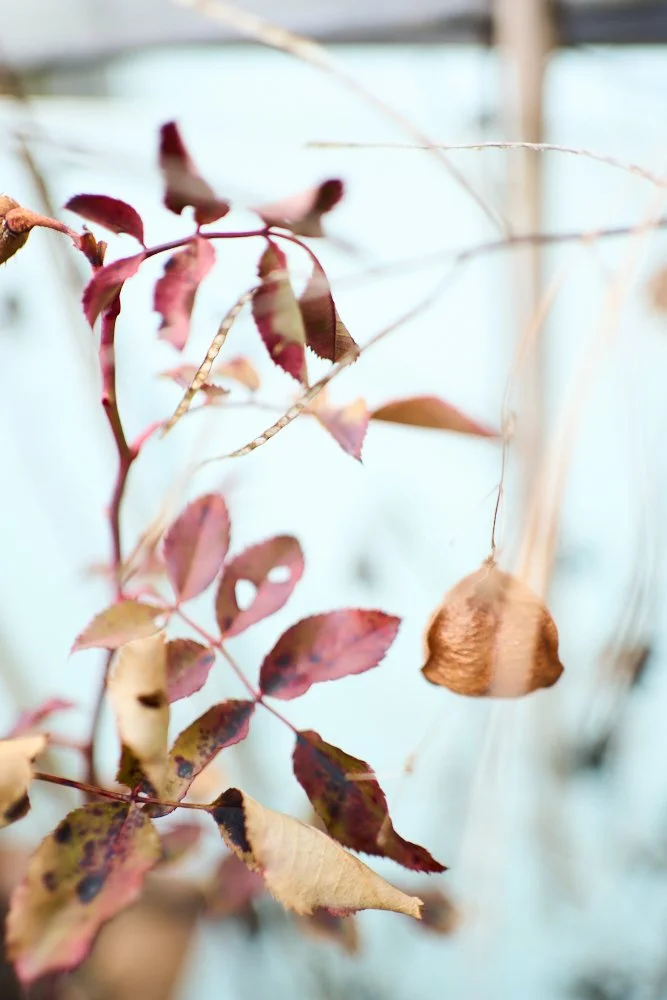
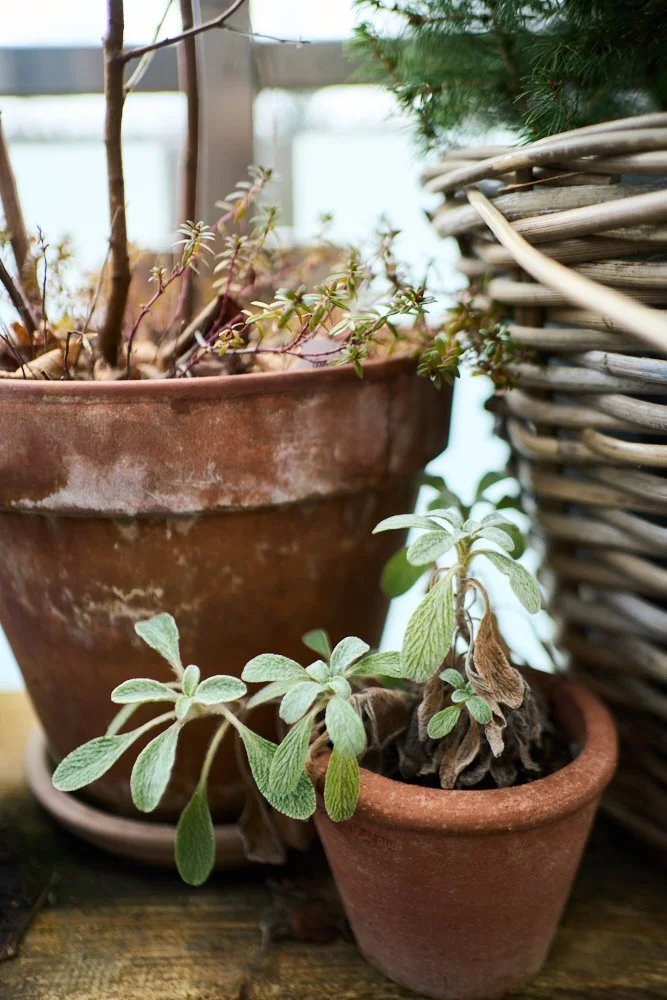
Left: Leaves of Rosa “Märchenzauber” paired with a capsule of Cardiospermum halicacabum / Right: Pots filled with Thymus sp. and Sideritis syriaca
Pioneering data
Within the Slowflower Bewegung and the slowflower-movement “Flowers from the Farm” there are first attempts to collect more data to create a scientific and evidence-based observation of benefits in seasonal, regional cut-flower farming. Although it is a logical conclusion that minimising the carbon footprints, the impact on resources and ecosystems in current productions to be in rhythm with natural, ecological horticultural techniques and gardening practises, provides more benefits to the environment as well as the individual sustainable businesses. (Sustainable Floristry Network, 2024)
The demand of cut-flowers at this point is enormous, too large to be fully taken over by seasonal, regional alternatives but the amount of farmers, farmer-florists and florists that work with slow flowers is increasing.
This makes a wonderful argument to shift Valentines-Day into the actual season, when there is availability of red roses, peonies, ranunculus and all the other delightful spring blooms that we are currently craving. Maybe collectively we can create a new date, maybe a whole month aka the “Valentines May”?
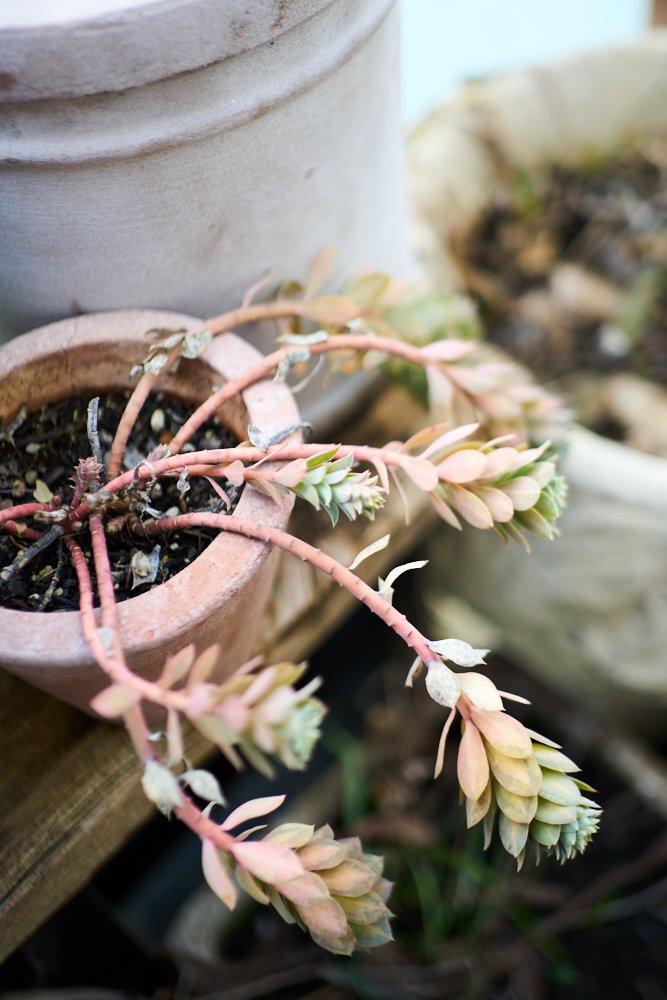
One of my favourite wintergreen companions: Euphorbia myrisnites
Bids for Connection
What this disparity between what we can truthfully experience and see right now in the gardens (in early February), and the eternal illusion of availability, youth and growth displayed in flower-shops and nurseries truly gifts us is the reminder to be present and to anticipate.
Anticipating spring with all its abundance allows us to rediscover the actual rhythms found when we are observing. Not to hype up that moment when spring is “finally here” (because of its slowness it often seems to have happened immediately and out of the blue) but to accompany the timespan until we are being immersed in natures rebirth “all-of-a-sudden”, aka the next two months.
It is this presence and observation that also allows us as humans to experience and understand life deeply, whilst also fuelling our bids for connection especially for valentines day:
Taken from the theory developed by Dr. John Gottmann, a “bid for connection” is any verbal or nonverbal attempt for example a look, touch, comment, or gesture, made by a person to get attention, affirmation, affection, or support from another (Gottman Institute, 2025).
These attempts arise not from consuming but from presence and the awareness of desires and needs that rise with our own selves. Stepping into natures rhythm, besides giving us an immense relief of stress as suggested by Kwasniewska et al. (2025) and the lowering of cortisol in our bodies as suggested by Hunter et al. (2019) but further increases our mindfulness. Sounds like almost a full circle moment when it comes to “gifting love” on Valentines.
It is a conscious step out of an illusion of eternity, as consumerism and our economics suggest, and into a world filled with the rhythms of life and decay — equally. And off course an immense beauty that transcends in flowers, that grow alongside nature, tended by the farmers and gardeners and humans that feel the importance of taking care of the soil, the wildlife and the humans in their own environments.
On one last note:
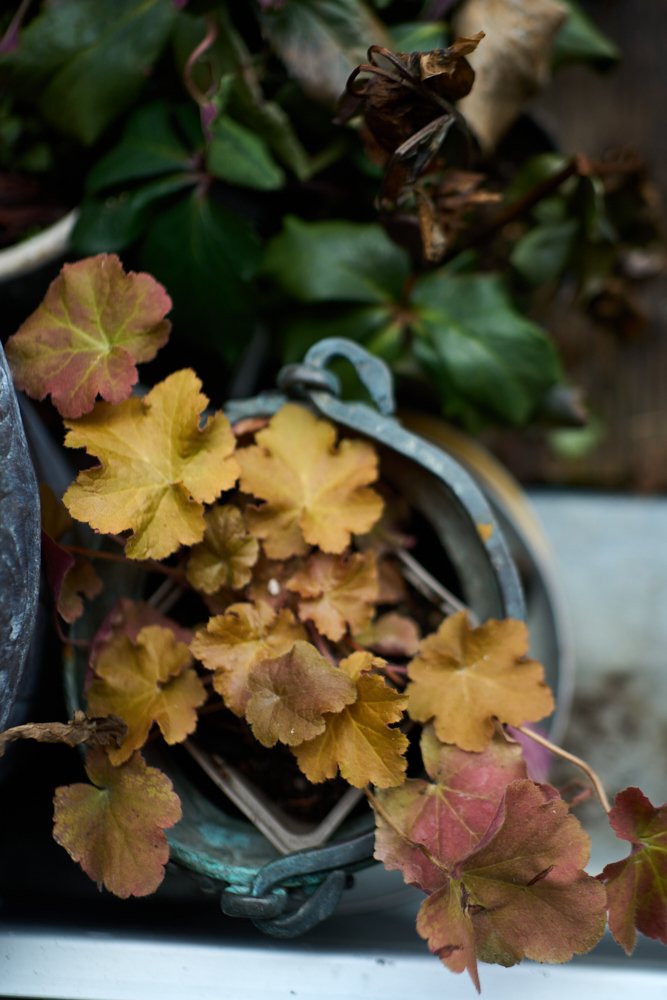
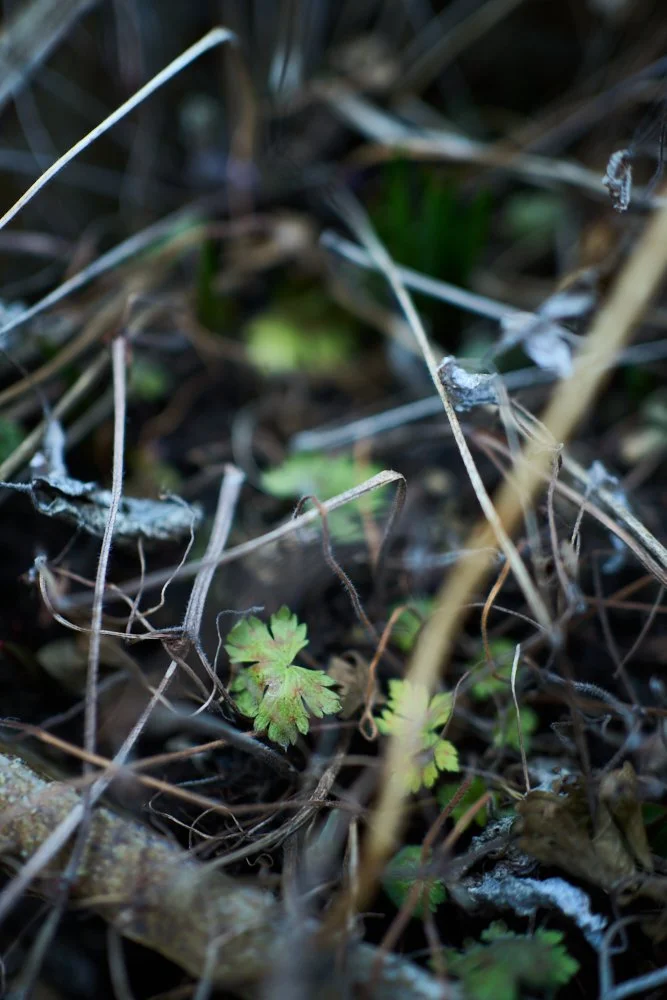
Left: Heuchera “Caramel” / Right: Geranium oxonianum “Katherine Adele”
For those in need of a flower-fix.
February does not have to be flower-less but maybe the key lies in adjusting the definition of what “flower” means. For me, personally leaves and branches do count as well. Wether as the known technique of bringing in blossoming stems, witnessing them bloom over an extended period (experiencing nature) or appreciating the shades of leaves in planters on the balcony, making mini-aragements in small vessels, bringing in a few “botanicals”, as I lovingly nickname them. From the leaves of Heuchera “Caramel” or the motion-filled Cyclamen hederifolium, to the soon-to-be flowering Iris reticulata or all the Snowdrops like my favourite Galathus niavlis “Flore Pleno”. If you have a garden, the many varieties of winter-flowering shrubs like of Viburnum bodnantense “Dawn” of Chimonanthus praecox as well as the extraordinary scented Hammamelis sp. will sweeten the anticipation for you.
So come on, lets postpone Valentine´s once and for all.
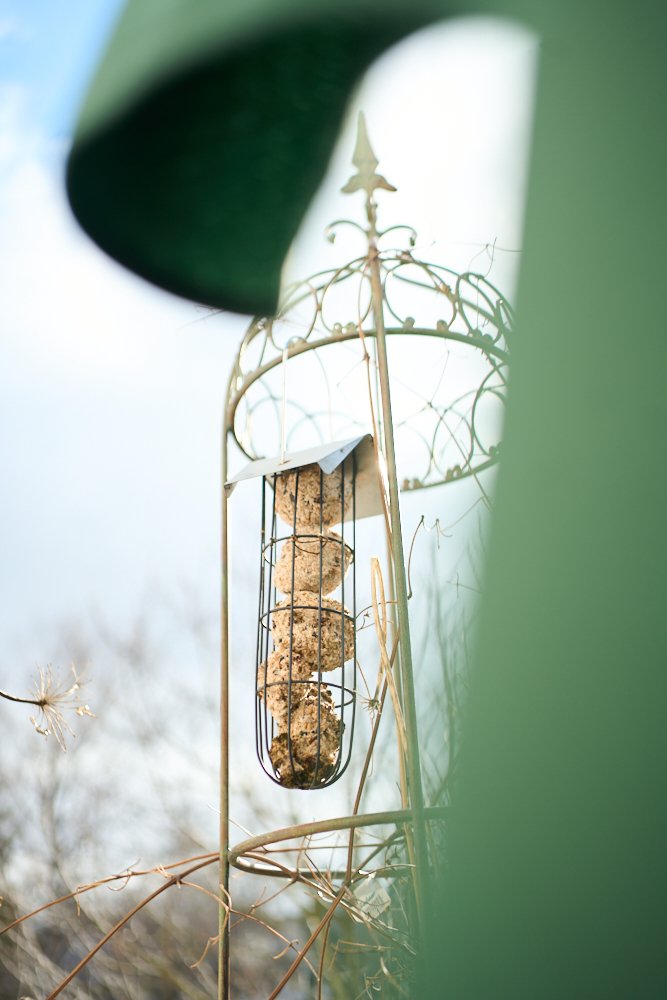
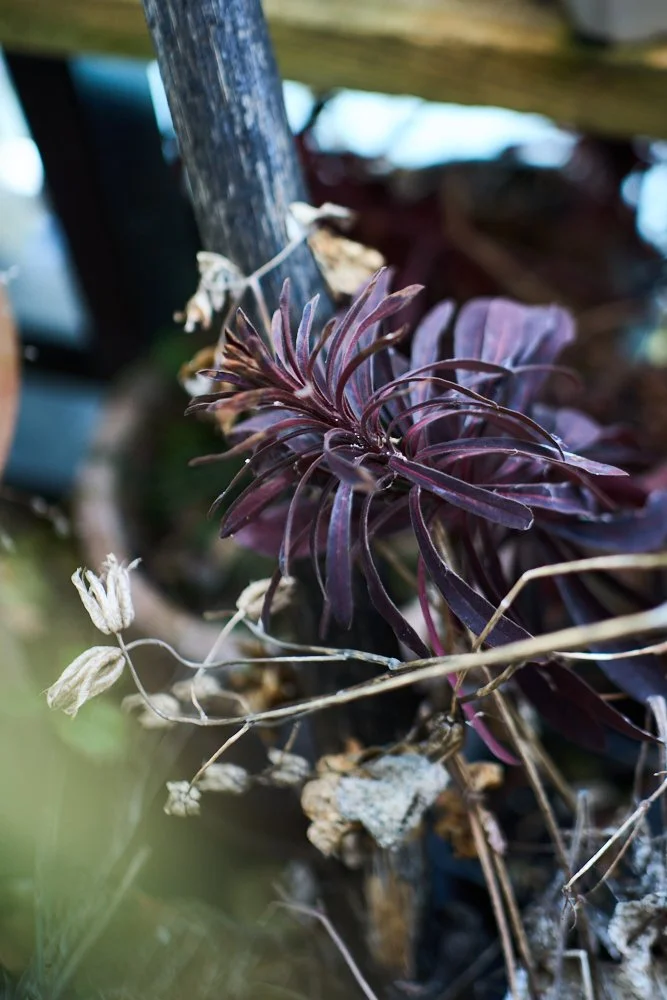
Left: The bird feeder and a obelisk (that usually carries Clematis “Paul Farges” / Right: Euphorbia “Miners Merlot” among Aquilegia sp. seed heads./ Below: Evergreen leaves of Penstemon barbatus “Coccineus”